What's new in the SVB collapse?
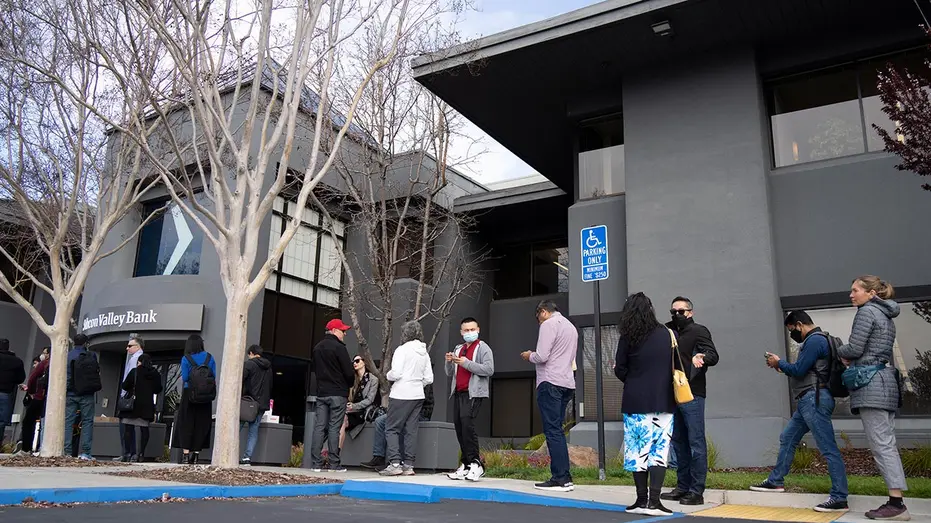
Introduction
$\rm\LARGE{B}$ank runs are old news, and so are regulatory failures.
Before the FDIC was created in 1933, runs were common. Deposit insurance and the Federal Reserve as lender of last resort were built to stop runs from spreading from one bank to the next, which is a narrower goal than stopping every run.
Wait a minute; doesn’t a bank run cause contagion? What am I missing?
A run is not enough for contagion. For most failed banks, the FDIC protected only insured deposits, because the causes were specific to that bank. When a run threatened the whole system, regulators did whatever it took. In 1984 the FDIC protected all depositors and creditors of Continental Illinois, and a congressman coined the phrase “too big to fail” at the hearings that followed.
Regulatory failures are just as familiar. From the Savings and Loan crisis of the 1980s and early 1990s to the subprime crisis of 2008, regulators have often missed a simmering problem until it hit the real economy. The 2008 crisis turned a housing collapse into a global recession, with deep losses in jobs, trade and investment.
So I wanted to know what, if anything, was new this time.
I ask: What was distinct and unprecedented in the SVB bank run?
Claim
My claim is that two things were new:
i) The speed of the run, driven by how information now travels.
ii) A mid-sized bank that regulators treated as non-systemic was declared systemic in one weekend, a step taken before only for giants. I call that status too IMPORTANT to fail: importance came from the moment, and size had little to do with it.
In the next section, I discuss each in detail.
The Novelties
1. Withdrawals at the speed of a group chat
On Thursday, March 9, 2023, depositors tried to withdraw about $42 billion from SVB in a single day. For scale: in September 2008, Washington Mutual, then the largest bank failure in U.S. history, lost about $16.7 billion of deposits in about ten days.
Part of this was SVB’s depositor base. About 94% of its domestic deposits sat above the $250,000 insurance limit at the end of 2022, according to S&P Global’s analysis of its regulatory filings, and those depositors were startups tightly networked through a handful of venture capital firms. Founders Fund, Peter Thiel’s firm, was among the investors reported to have told portfolio companies to move their money. When every investor a founder relies on says the same thing on the same day, the founder moves.
But I believe fast runs are now the norm, because information travels differently. Not long ago, news reached depositors through media houses that decided what to print and when. Today a depositor can follow the source directly, whether that is the investor, the founder or the bank’s own announcement, and everyone sees the same message at the same moment. Information that comes straight from a credible source looks the most complete, so it is the most acted on. Add a banking app that moves money in seconds, and many individually rational decisions turn into one collective rush. I use the word “trigger” carefully here. A trigger is a different thing from a cause: the German invasion of Poland triggered the Second World War, while its causes ran from Versailles to the failure of the League of Nations.
In an older, slower information market, even a troubled bank could buy time. If different depositors read different newspapers, each with its own spin, the run would start slowly, and the bank could raise capital in the meantime. That window has closed. SVB announced a $2.25 billion share sale on March 8 to fill the hole left by its bond losses, and the announcement itself helped start the run. Regulators closed the bank two days later.
Could faster information prevent runs instead? The Diamond-Dybvig model, which won its authors a share of the 2022 Nobel prize, shows that a perfectly solvent bank can still suffer a run. A panic run needs no misinformation: if I expect other depositors to withdraw, withdrawing is my best response even when the bank is solvent. Faster information can coordinate a panic as easily as it can stop one. Their remedy is deposit insurance, which removes my reason to run first.
Social media and instant banking speed up every run, whether it is driven by fundamentals or by panic. That raises the value of the one thing that removes the reason to run: a credible guarantee, announced before the panic starts.
2. A bank declared systemic in one weekend
Regional banks like SVB are not classified as systemically important. They face lighter capital, liquidity and risk management rules and less supervision. The logic of that triage is to separate the “too big to fail” institutions, whose size and connections could spread a problem across the system. Those banks get stricter rules and, implicitly, a promise of rescue.
So why were SVB’s uninsured depositors made whole? SVB was not “too big to fail.” The moral hazard argument says regulators should have let uninsured depositors take losses, because the fear of a run keeps bank managers careful.
The regulators answered that question themselves. On March 12, the Treasury, the Fed and the FDIC invoked the systemic risk exception to protect every SVB depositor. They invoked the same exception for Signature Bank that day. Regulators had used it in 2008 for giants like Wachovia and Citigroup. Using it for a mid-sized bank regulated as non-systemic was new. I believe they were right, and I believe their action tells us what they thought was going on.
The clearest signal is the Bank Term Funding Program, announced the same day. It lends to banks against Treasuries and agency debt valued at par, ignoring their market losses. A facility that ignores market losses on every bank’s bonds treats those losses as a system-wide problem. And they are large: the FDIC reports that U.S. banks carried $620 billion of unrealized losses on securities at the end of 2022, $341 billion of it in held-to-maturity portfolios, mostly because rates rose so fast.
Granted, SVB did not manage its interest rate risk. But I would not record a COVID death as a diabetes death, even though diabetes makes COVID more dangerous, because the patient was not dying of diabetes before COVID arrived.
So SVB was too important to fail at this moment, whatever its size. Had the run come from problems unique to SVB, there would have been little risk of contagion, and making uninsured depositors whole would have been hard to defend. By backing every depositor, regulators acknowledged that the underlying stress was system-wide, and that SVB, as the weakest link, simply broke first.
My hope for the future
I would rather not hunt for scapegoats, but the root of this stress is a forecasting failure.
The rate hikes were the immediate cause, and the late start made them steep. With the effective federal funds rate at 4.83% after the March 22 hike, why would I keep cash in a deposit paying close to zero? Deposits will keep leaving banks while that gap is this wide, however well a bank manages its risks.
The Fed raised rates by 4.5 percentage points in twelve months, the fastest pace since the early 1980s, after calling inflation “transitory” through most of 2021. Had it seen inflation coming, it could have raised rates earlier and more gradually, and banks would have had time to adjust their balance sheets. Economic models explain crises well after the fact and predict them poorly, and this was one more example. I would like regulators to test extraordinary interventions the way engineers test bridges: simulate them under stress before they reach the whole system. That will take creativity, but given how far these policies reach into banks and the real economy, I think it is worth it.